A Second Brain for GMs: Designing a Smarter Worldbuilding Experience
Helping Game Masters access campaign details instantly through live search, auto-linked creations, and customizable detail pages.
PROJECT OVERVIEW
Second Mind is a lightweight, recall-first worldbuilding tool designed for Game Masters who prep digitally but run games in physical tabletop environments. As a GM, I struggled to find a tool that helped me quickly recall characters, items, and story details during live play. Existing apps were either too complex, too slow, or built for authors rather than GMs.
I created Second Mind to solve that gap: a fast, intuitive “second brain” that helps GMs stay organized and access information instantly, without disrupting the flow of their sessions.
DEFINE
User personas
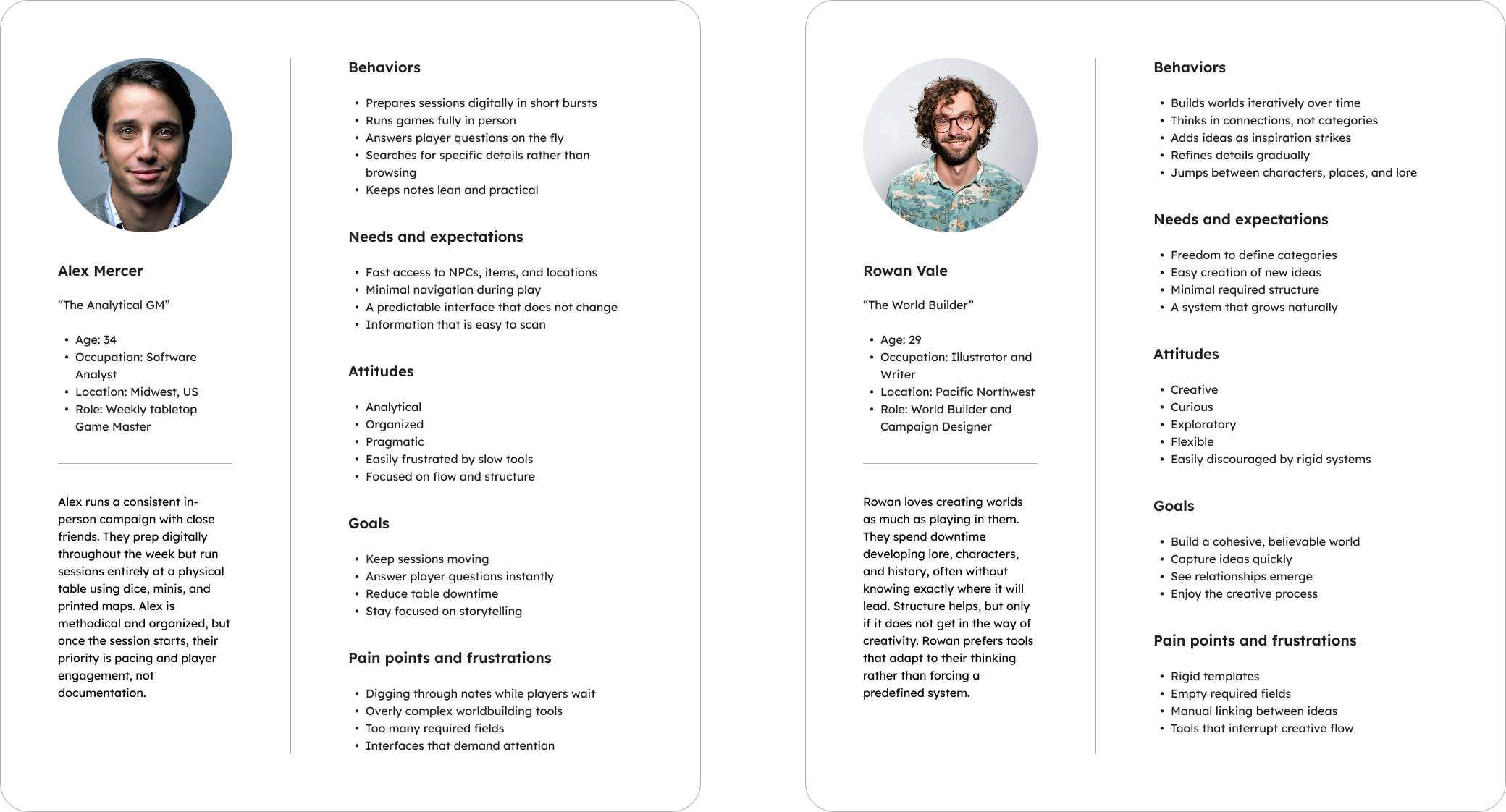
To ground my design decisions in real behavior, I created two user personas that represent the primary ways people interact with tabletop worlds. These personas were informed by my own experience as a Game Master and by patterns I observed across existing tools. The Game Master persona focuses on speed, clarity, and in-session recall, while the World Builder persona emphasizes creative exploration and organic growth. Together, these personas helped me balance analytical efficiency with creative flexibility throughout the design process.
DISCOVERY
Competitive Analysis
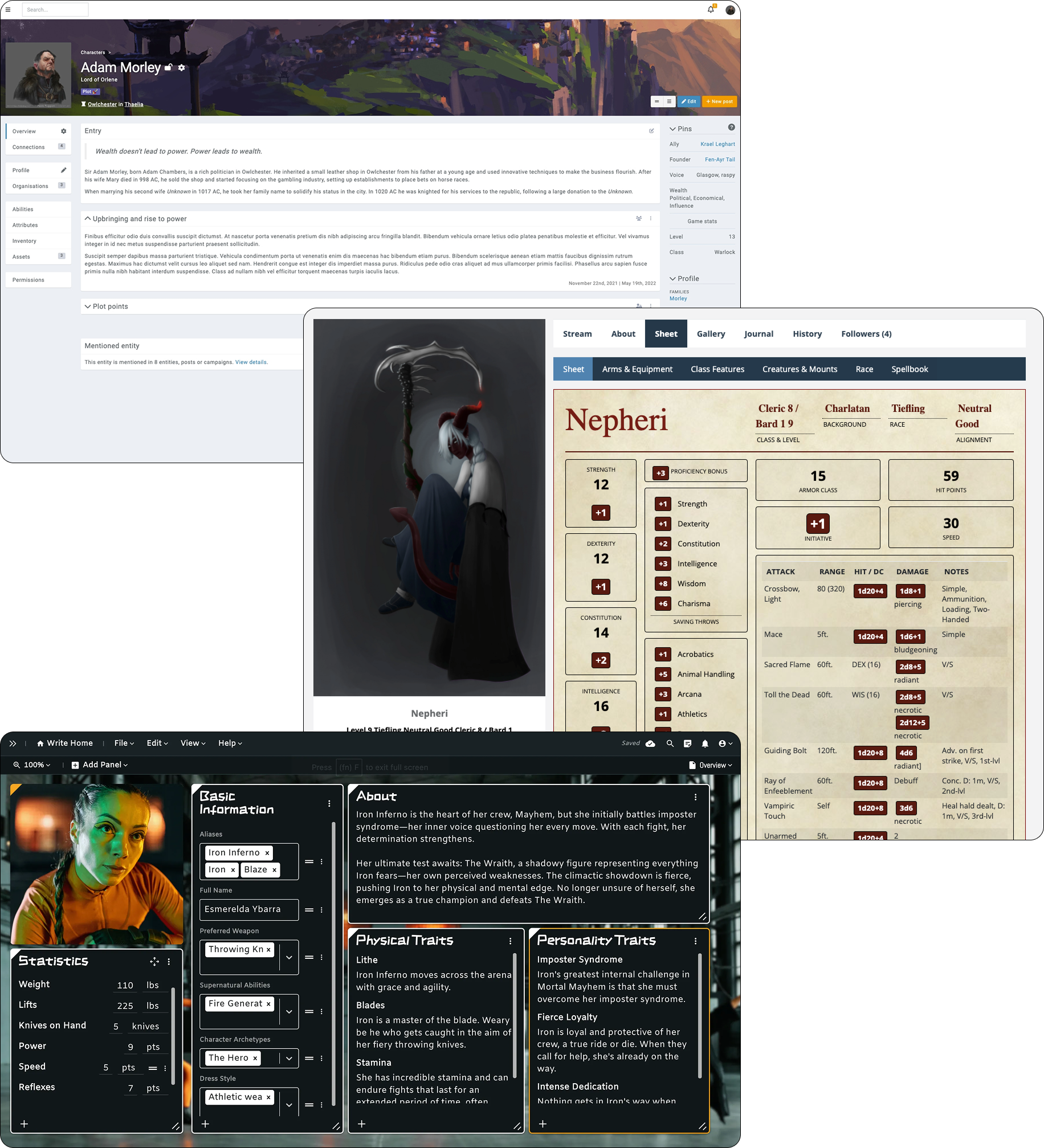
Existing worldbuilding tools like World Anvil, Kanka, and Campfire Writing are designed for authors and long-form storytellers, not for Game Masters running live tabletop sessions. While powerful, their interfaces are dense, feature-heavy, and require significant setup before they become useful. Navigating these tools mid-session is slow and disruptive, making it hard for GMs to quickly recall characters, items, or plot details on the fly.
IDEATION
User flows & wireframes
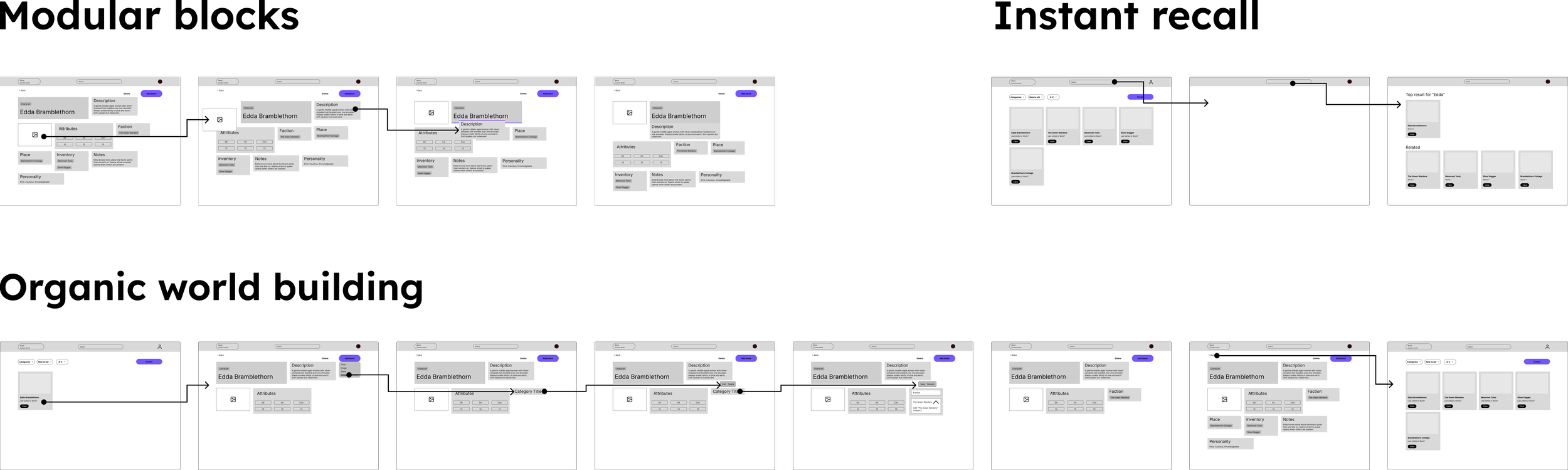
These insights led to three core design directions for Second Mind: instant recall through search as you type, organic world growth without manual linking, and customizable creation layouts that reflect each GM’s unique needs. With these requirements defined, I began translating them into early wireframes to explore how the interface could bring these ideas to life.
Visual direction
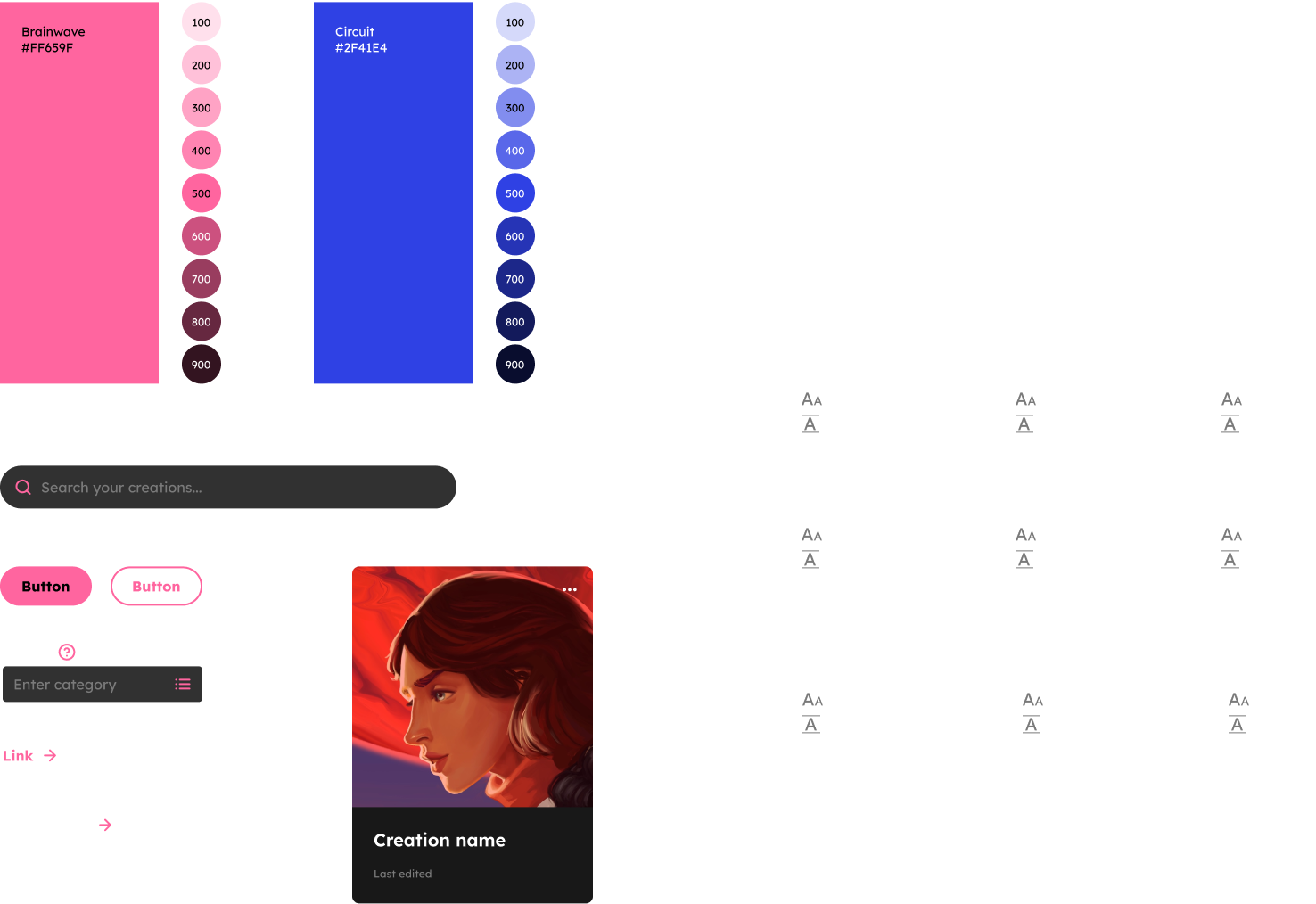
Second Mind’s visual design prioritizes clarity and low visual strain during live tabletop play. I chose Lexend as the primary typeface because it was designed to improve readability and reduce visual stress, making it ideal for quick scanning and sustained focus.
The color system reflects the balance between creativity and structure at the heart of the product. Pink represents the human, intuitive side of worldbuilding, while blue represents the system and recall layer. Dark mode was treated as a core feature, supporting use in low light environments and helping the interface stay unobtrusive during play.
FINAL
Putting it all together
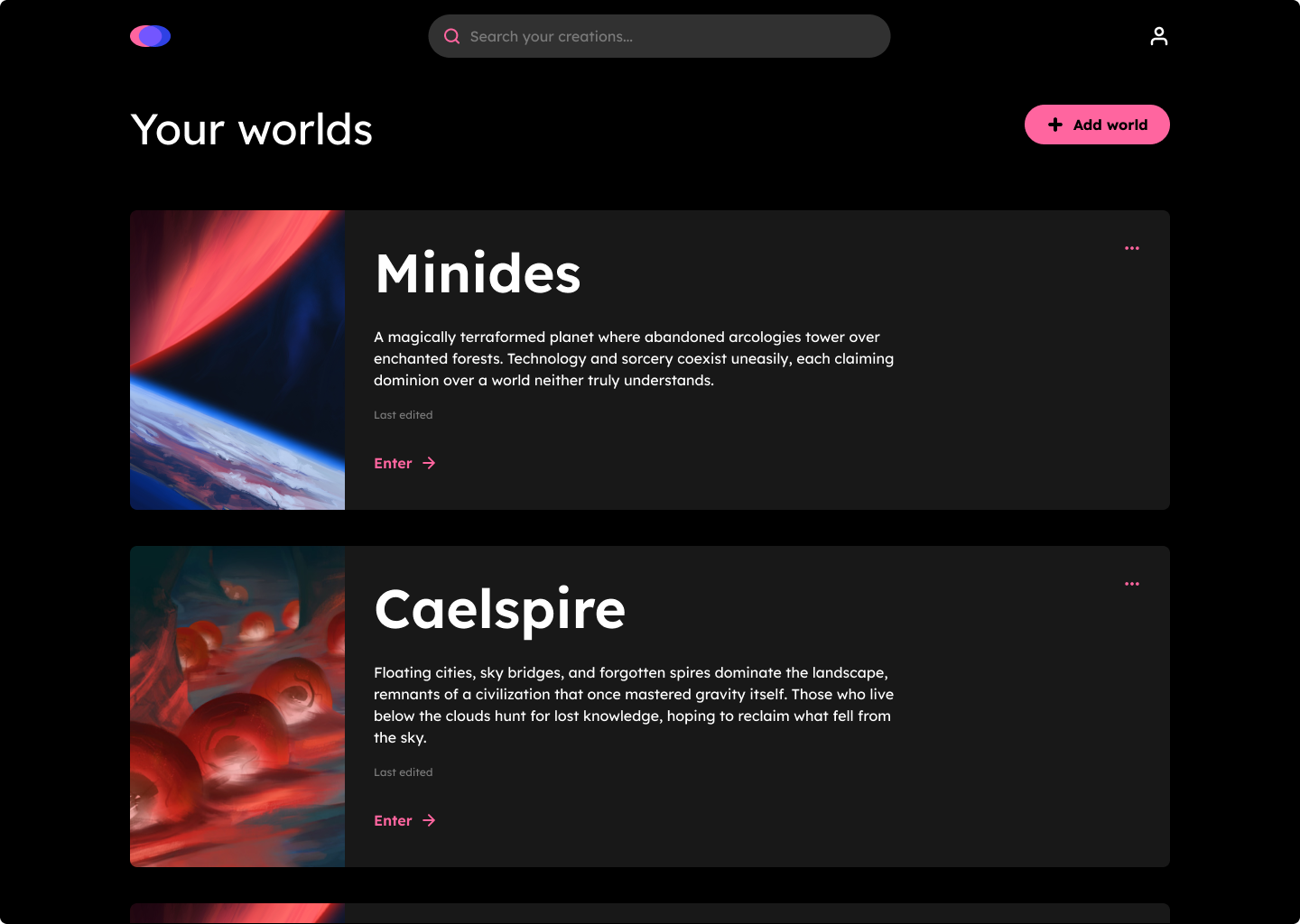
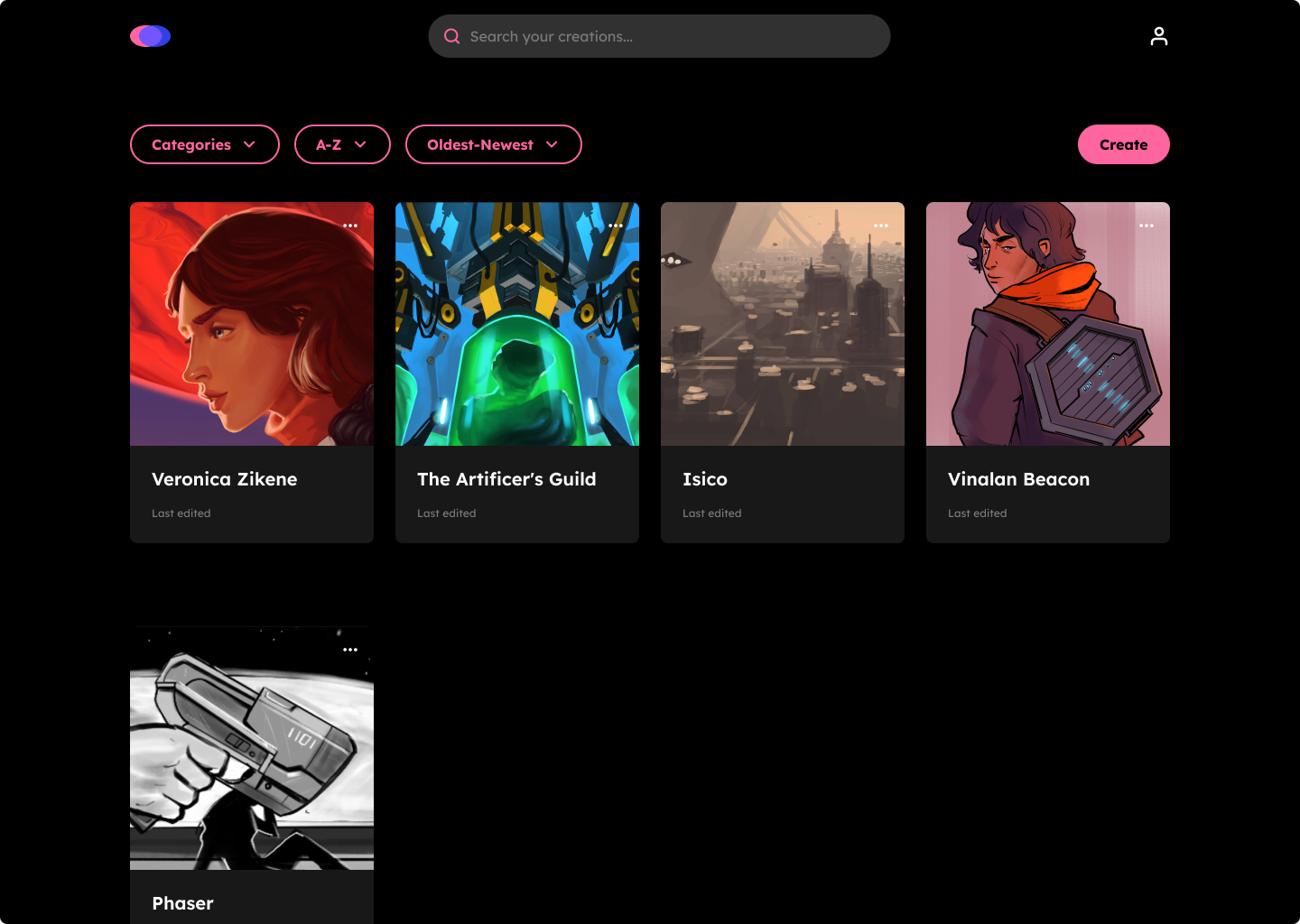
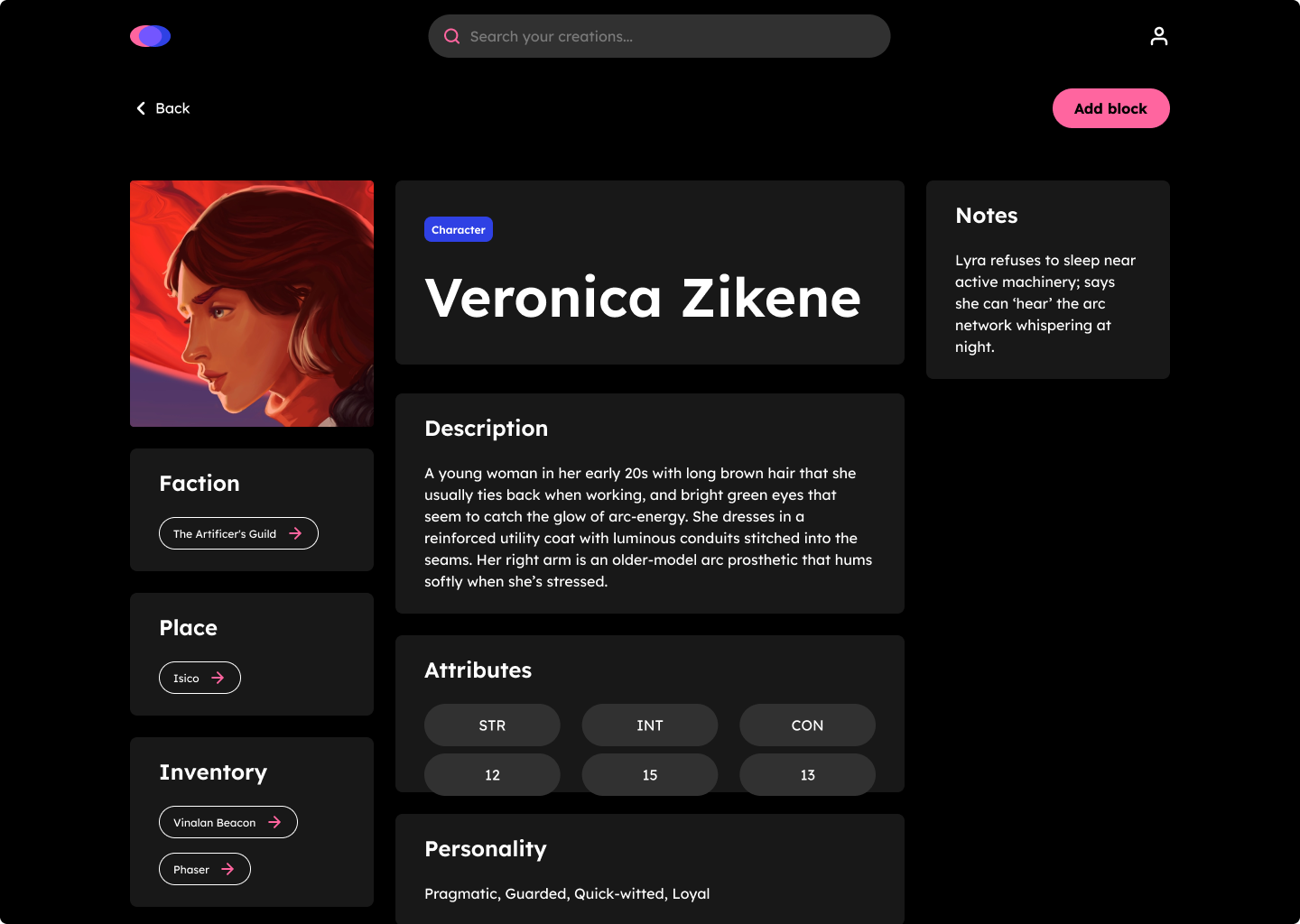
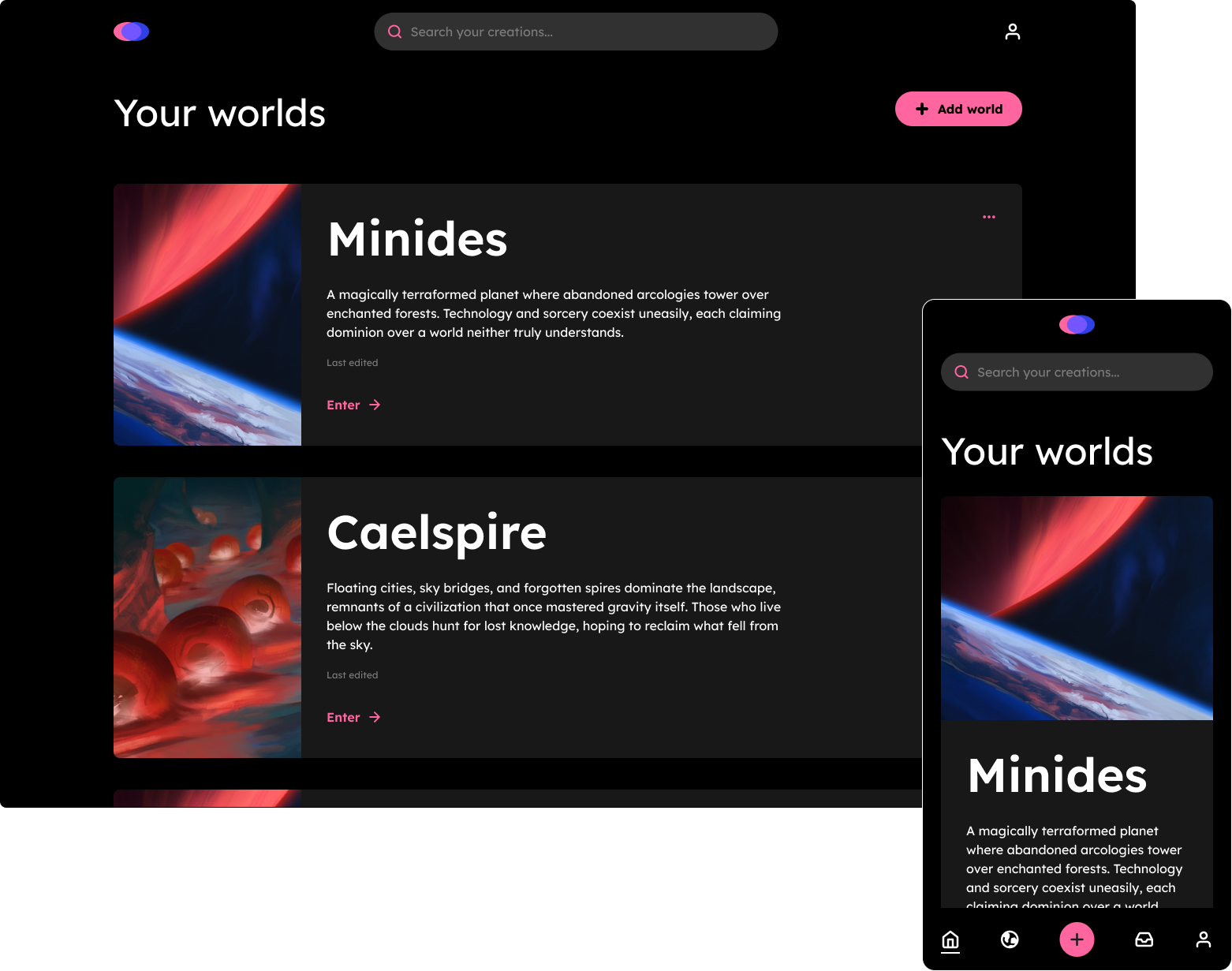
The final designs bring together the core ideas behind Second Mind into a focused, recall-first experience. Search-driven navigation, organic creation, and flexible layouts work together to support fast access to information during live tabletop play. Visual decisions emphasize clarity and low distraction, keeping the interface calm and easy to use at the table.
Together, these designs reflect the goal of Second Mind as a lightweight second brain that supports both preparation and in-session recall, allowing Game Masters to stay focused on storytelling rather than managing a tool.